Kudzu and wisteria: Rethinking conflict through the lens of nature
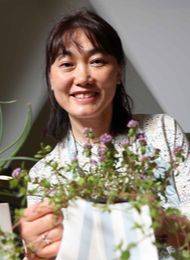
Oh Kyung-ah The author is a garden designer and the CEO of OhGardens.
A ten-minute walk from my home brings me to a small garden where I grow ornamental plants such as mophead hydrangeas and star magnolias. On a recent visit, I was stunned to find every inch of soil, and even the plants I had been nurturing, blanketed in a dense green mass. It was kudzu.
Kudzu is best known for its roots. Traditionally, the root is juiced or dried and ground into powder for cooking. Its large, bean-like leaves, when young, are edible and often used as pickled greens or as wraps, similar to perilla leaves. Kudzu is not without aesthetic value, either. At the 1876 Philadelphia Exposition, it was introduced as a decorative vine suitable for pergolas, celebrated for its grape-like clusters of pink and purple flowers with a pleasant fragrance.
![Leaves of kudzu cover various plants in a small garden. [OH KYUNG-AH]](https://img4.daumcdn.net/thumb/R658x0.q70/?fname=https://t1.daumcdn.net/news/202506/25/koreajoongangdaily/20250625000835374ymps.jpg)
Despite these qualities, farmers often rank kudzu among the most troublesome plants. As a vine, it roots easily — any part of its fuzzy stem that touches the ground can sprout anew. The growth is aggressive, reaching up to 20 centimeters (7.9 inches) per day. Worse, when it climbs other plants, it can smother them with its broad leaves, eventually killing its host.
Scientifically named Pueraria montana, kudzu is written as gal in Chinese. Combined with the character for wisteria, deung, the word galdeung, or "conflict" in Korean, originates from the intertwined growth patterns of these climbing plants. Yet the metaphor warrants a closer look.
Kudzu typically thrives in barren, nutrient-poor soil. Like other legumes, it enriches the soil by fixing nitrogen through its roots. Its entangled growth pattern — what we commonly perceive as conflict — is actually a survival strategy. By twisting and leaning on one another, vines create a stronger, shared support system.
Seen this way, the very nature of the plant need not be purely negative. Entanglement, when it leads to mutual reinforcement rather than destruction, becomes a form of cooperation. Perhaps the key is not in avoiding the tangle but in cultivating it into a sturdy structure of interdependence. From the wild resilience of kudzu and the tangled grace of wisteria, we might learn a different way to perceive and engage with conflict — not as a force to be eradicated, but as a dynamic from which something stronger can grow.
Translated from the JoongAng Ilbo using generative AI and edited by Korea JoongAng Daily staff.
Copyright © 코리아중앙데일리. 무단전재 및 재배포 금지.
- U.S. bombing of Iran might convince North Korea it was right to build nukes
- Owner of dog killed by two off-duty soldiers, one civilian with BB guns claims family received death threats from suspect's rela
- Frog Boys case: Five students vanished in 1991, found dead years later — still no answers
- With no blueprint, Hanwha reverse-engineers U.S. Navy ship in bid for $14.5B market
- Animal welfare activists want justice for Jindo dog that suffered severe cruelty
- President to skip NATO summit, manage economy at home amid Middle East tensions
- Reality check: How K-pop evolved in the absence of BTS
- North Korea blurs Lee Kang-in out of its Club World Cup broadcast
- BTS's Suga funds Min Yoon-gi Center for autistic individuals with $3.6 million donation
- Possible Strait of Hormuz blockade puts Korea on energy security alert