[Minute to Read] Lee, Xi hold first phone call to discuss bilateral ties
이 글자크기로 변경됩니다.
(예시) 가장 빠른 뉴스가 있고 다양한 정보, 쌍방향 소통이 숨쉬는 다음뉴스를 만나보세요. 다음뉴스는 국내외 주요이슈와 실시간 속보, 문화생활 및 다양한 분야의 뉴스를 입체적으로 전달하고 있습니다.
The Minute to Read (Weekdays) series provides a quick overview of significant events in Korea everyday, conveniently condensed into a one-minute read. Here’s a recap of what happened yesterday: June 10.
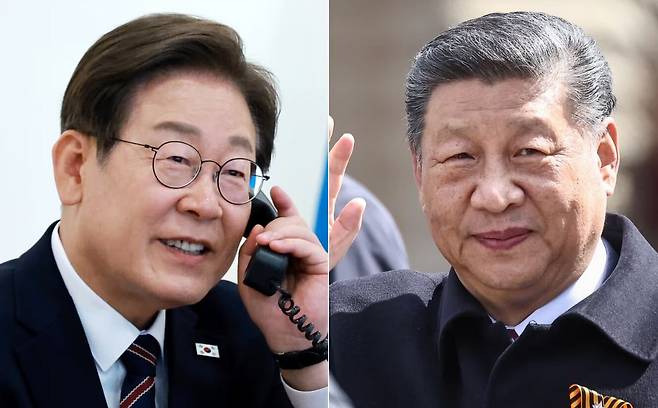
Lee, Xi hold first phone call to discuss bilateral ties
On June 10, South Korean President Lee Jae-myung held a 30-minute phone call with Chinese President Xi Jinping, marking his third conversation with a foreign leader since taking office. According to the presidential office, the two leaders discussed strengthening the South Korea-China partnership through cooperation in economy, security, culture, and diplomacy, and agreed on the need for close collaboration as both countries serve as APEC chairs in 2024 and 2025. Lee invited Xi to attend this year’s summit in Gyeongju and emphasized his commitment to deepening bilateral ties. Xi praised Lee’s election victory and highlighted the importance of stable supply chains and mutual respect for core interests. He also underscored the value of a steady and evolving relationship amid global uncertainty. Chinese state media echoed the call’s tone, quoting both leaders affirming the long-standing ties and shared goals of peace and development in the region.
Lee’s retrial postponed under Article 84 protection
The retrial of South Korean President Lee Jae-myung on charges of violating the Public Official Election Act has been indefinitely postponed following the Seoul High Court’s interpretation of Article 84 of the Constitution, which grants presidential immunity from criminal prosecution during a president’s term, except in cases of insurrection or treason. The court’s decision, effectively suspending the case until Lee leaves office, has drawn both support and criticism—praised by some as necessary for stable governance and condemned by others as politically motivated. The ruling may impact Lee’s four other ongoing trials, which include allegations of corruption, illicit payments to North Korea, and misuse of corporate credit cards. Meanwhile, the Democratic Party is pushing legislation to mandate the suspension of all criminal trials against sitting presidents.
S. Korea’s tech strength lies in semiconductors, but gaps remain
South Korea ranked fifth overall in a new global assessment of national competitiveness in emerging technologies by Harvard’s Belfer Center, but its score—driven largely by strength in semiconductors—was less than half that of the United States and China. The country placed mid-tier in AI (9th), biotech (10th), quantum (12th), and space (13th), reflecting significant gaps with top-ranked nations. South Korea received zero points for AI model accuracy and algorithm development, highlighting weaknesses in foundational research and talent retention. Experts warn that without stronger government support and global collaboration—especially in biotech, quantum, and space—the country risks falling behind faster-growing competitors. Persistent talent shortages, compounded by demographic decline and a STEM brain drain to medical fields, continue to hamper South Korea’s tech competitiveness.
One minute, that’s all it takes to know about Korea. Click here ☞ https://page.stibee.com/subscriptions/305897
Copyright © 조선일보. 무단전재 및 재배포 금지.
- 국민통합위원장 “검사 보완수사권 완전 폐지는 위헌”
- 찜통된 한반도… 폭염중대경보 첫 발령
- “야외 활동 Stop, 시원한 곳 Move, 건강 Check”
- 한국, 전차·자주포 ‘대형 방산’에 집중… 정작 장병 생명 직결된 소총엔 소홀
- 하메네이 장례식의 ‘마스크맨’… 혹시 모즈타바?
- 유가 다시 뛰나… 시장은 초긴장
- “1년에 몇건씩 나는 장윤기 사건, 왜 이리 보도 많나”는 김어준
- 안철수 “한동훈, 국힘에 얼씬도 말라” 복당 반대
- 김민석·송영길 “선호투표로 가야” 정청래 “다구리 맞아도 견딜 것”
- 존재감 약해질까봐? 조국, 일주일새 글 30개 넘게 올려