Hy focuses on B2B amid deepening losses
The company recorded 1.68 trillion won ($1.2 billion) in revenue in 2024, up 10.8 percent from the previous year. However, its operating loss widened to 64.5 billion won, more than double the 27.4 billion won loss posted in 2023.
The downturn was largely driven by underperformance in core dairy operations and mounting losses from subsidiaries in food delivery and medical robotics.
To reverse this trend, hy is betting on probiotics as a high-margin, scalable growth engine—especially through B2B deals that do not require heavy marketing expenditures.
The company supplies patented probiotic strains to other health and wellness companies, including CKD Healthcare. It expects this channel to become a pillar of future profitability.
“The B2B probiotics segment offers strong margins and stable demand,” said a company official. “Many leading brands now use our individualized probiotics as the core ingredients in their premium products.”
Hy launched its dedicated B2B brand, hyLabs, in 2020.
Last year, the division posted 11 billion won in revenue. The company is now expanding its probiotic product range to include functional ingredients that target memory enhancement, immune support, hangover relief, and digestive health.
New products based on fermented red ginseng and fermented deer antler were added in 2024. Hy is preparing additional applications for regulatory certification through the Ministry of Food and Drug Safety.
As of 2025, hy holds over 5,000 strains of probiotics, more than 250 types of natural extracts, and six proprietary ingredients certified under individualized regulatory approval.
According to the Korea Health Functional Food Association, the domestic health functional food market was valued at about 6.04 trillion won in 2024, representing a 16.8 percent increase from 2020.
Market analysts say that as probiotics are increasingly recognized for benefits beyond gut health—such as brain function and skin improvement—product diversification and functional targeting have become critical for growth.
In parallel with its B2B efforts, hy is also responding to consumer demand for lower-sugar offerings. The company has introduced new SKUs and reformulated existing products under the low-sugar banner.
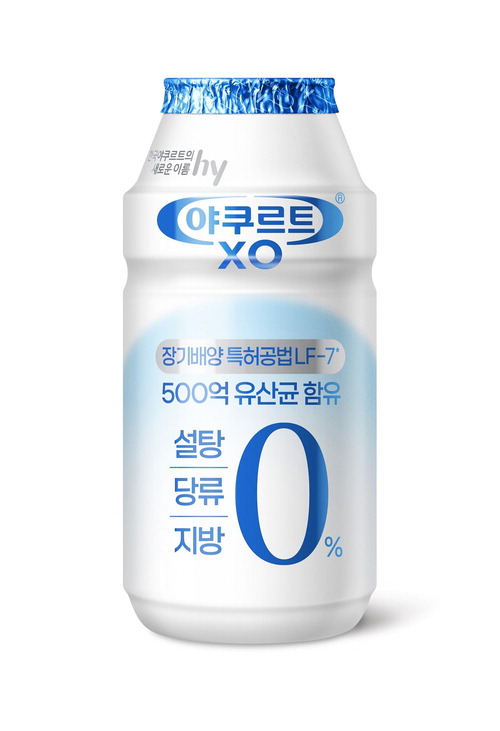
Most notably, it recently launched YakultXO, its first zero-sugar fermented drink under the Yakult brand. The product contains no sugar, fat, or added calories, with just 10 kilocalories per 100 milliliters.
It has also introduced a reduced-sugar version of its flagship vegetable and fruit juice line, Haruyachae. These moves are aimed at capturing market share in the rapidly growing segment of health-conscious consumers, particularly among younger demographics.
Copyright © 매일경제 & mk.co.kr. 무단 전재, 재배포 및 AI학습 이용 금지
- 오늘의 운세 2025년 5월 26일 月(음력 4월 29일) - 매일경제
- 김문수 41.3% VS 이재명 46% … 격차 한 자릿수로 좁혀져 [한길리서치] - 매일경제
- “둔촌주공 이후 동남권 최대 재건축”...40층에 3350가구 대단지 온다 - 매일경제
- “마음 급하니 우선 강북이라도”…대출 규제에 바빠진 무주택자들 - 매일경제
- “엄마, 용돈 좀 올려주세요”…남학생 PC방 가서 주로 지출, 여학생은? - 매일경제
- 정년퇴직 후에도 다시 ‘삼성맨’으로…재채용 문 연 삼성전자, 자격요건은? - 매일경제
- “싹 다 가져가고 잠적”…이이경, 중고 거래자에 집 털려 - 매일경제
- 빌라 주차장서 폭발 사고, 1명 부상…차량서 발견된 물건보니 - 매일경제
- “전담인줄 알았더니 머리가 핑”...빠르게 스며드는 신종마약, 10대들 노린다 - 매일경제
- [오피셜] ‘손흥민 우승!’ 토트넘, 3시즌 만에 챔피언스리그 복귀…리버풀·아스널·맨시티·첼