Worker killed during lubrication work while bread still on line: SPC under fire for ignoring both safety and hygiene
이 글자크기로 변경됩니다.
(예시) 가장 빠른 뉴스가 있고 다양한 정보, 쌍방향 소통이 숨쉬는 다음뉴스를 만나보세요. 다음뉴스는 국내외 주요이슈와 실시간 속보, 문화생활 및 다양한 분야의 뉴스를 입체적으로 전달하고 있습니다.
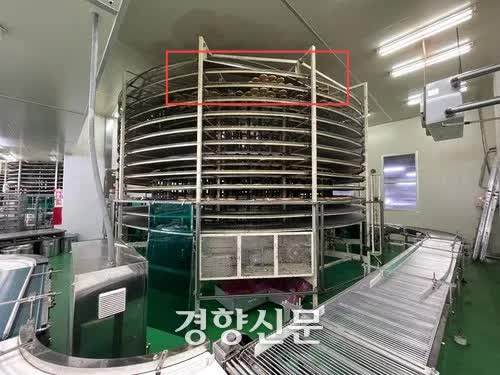
Another fatal accident has occurred at an SPC Group bakery factory, where a worker was caught in a machine and killed. The accident has reignited criticism that SPC Chairman Hur Young-in’s promise to invest 100 billion won in safety management was nothing more than an empty pledge. The accident, in which a worker who was spraying lubricating oil was trapped, is expected to raise food hygiene controversy as there were finished products on the site that were about to be packaged.
According to the “Safety Management Letter” published on SPC’s website on May 21, the company said it had invested 83.5 billion won in industrial safety from 2022, following a previous fatal accident, through last year. After a worker in her 20s died in a similar entrapment accident at the SPL factory in Pyeongtaek, Gyeonggi Province, in October 2022, Chairman Hur publicly apologized and pledged to invest 100 billion won by 2025. SPC claimed that about 84 percent of that promise has already been fulfilled. The company highlighted efforts such as expanding safety facilities, improving equipment safety, automating high-risk tasks, and enhancing work environments.
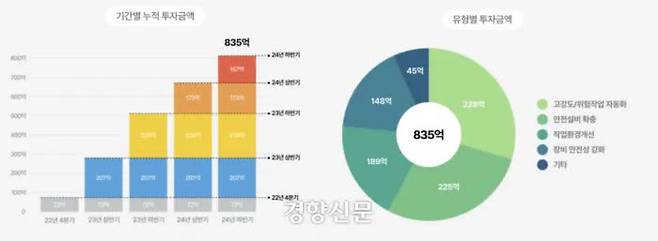
By category, SPC said that it invested 22.8 billion won in automating hazardous tasks, 22.5 billion won in expanding safety equipment, 18.9 billion won in improving work conditions, 14.8 billion won in equipment safety, and 4.5 billion won in other areas.
SPC also introduced the activities of its Safety Management Committee, which was formed following the fatal accident in 2022. Comprising four external members and one internal member, the committee has held 15 regular meetings as of February this year to discuss and push forward a safety management roadmap. The company said it has also annually rewarded exemplary safety practices across the company since 2023.
However, the company now faces renewed accusations that its investments were ineffective. Despite these initiatives, fatal and serious accidents have continued to occur. In August 2023, a worker in his 50s died after getting caught in a dough machine at SPC’s Shany factory in Seongnam, Gyeonggi Province, and other accidents of finger amputations caused by machinery also followed. The latest case involved a female worker in her 50s who died during a night shift at SPC Samlip’s bread factory in Siheung, Gyeonggi Province, after being pulled into a conveyor belt.
Mr. A, who works on a production line at an SPC affiliate factory, said, "These accidents were predictable. They all have the same thing in common: they were operating machines during 12-hour shifts and overnight shifts.“ He added, ”The problem is that the worksite atmosphere prioritizes uninterrupted production over safety. The victims of the accidents couldn’t stop the machines even when something went wrong because halting a production line is treated like a crisis. As long as the company culture doesn’t change, these tragedies will continue.”
Workers familiar with SPC’s production lines have also raised questions about the circumstances of the recent accident. According to police, the victim was applying lubricant to a conveyor belt to keep it running smoothly when her upper body got caught in the machine. The conveyor belt is responsible for moving the freshly made hot bread to the next step, the packaging line, while it cools for about 30 minutes, and the fact that she was spraying lubricant suggests that the conveyor belt was not running smoothly at the time.
The factory in Siheung, which produces the currently popular “KBO Bread,” is believed to have been running 24/7 to meet high demand. Industry sources say that cleaning or repairing the machines requires a full shutdown of the production line, which companies are often reluctant to do.
A photo released by the Siheung Fire Station shows loaves of bread still on the conveyor belt. “The machine was squeaking in the finished product process, just before packaging, so the victim must have sprayed lubricant to keep it running smoothly,” said Mr. A. "But that is completely unacceptable. The lubricant could get on the bread, which is something you should never do."
A food industry insider also said, “While food-grade lubricants are used in machinery, such maintenance is only performed after production ends. Spraying lubricant while the machines are running, especially with finished products present, is against common sense.”
Kang Kyu-hyung, former head of the SPL branch of the Korean Chemical, Textile & Food Workers’ Union, said, “If there’s a problem with a machine, the maintenance team is supposed to stop the line and perform repairs. But this machine had ongoing issues due to wear and tear, and the worker likely did what she had always done.” Kang added, “This was clearly a dangerous machine that workers could easily access. It’s also likely that two-person teams and on-site supervisors weren’t in place. The lack of any proper safety system is a sign of complete structural failure.”
SPC responded by saying, “We cannot comment on the case as it is currently under police investigation.”
※This article has undergone review by a professional translator after being translated by an AI translation tool.
Copyright © 경향신문. 무단전재 및 재배포 금지.
- “당 어려울 때 떠난 분들” “양지만 계신 분”···‘민주당 뿌리’ 3파전 경기지사, 추·양·조
- 미국 국방장관 “프로젝트 프리덤은 한시적 작전···한국 등 해협 재개방 동참해야”
- 차량서 범행 대상 물색···광주서 일면식 없던 고교생 살해 20대, ‘계획범죄’였다
- [인터뷰]한상희 교수 “이 대통령, 특검으로 자기 사건 재판관 돼…공소취소 책임은 누가 지나”
- 어린이 “대통령 어떻게 됐어요?” 이 대통령 “국민이 뽑아, 잘못하면 쫓겨날 수도 있어요”
- 미국의 호르무즈 선박 호위, 이번엔 더 위험하다···1987년 ‘어니스트 윌’의 경고
- 서울고검 “이화영, 조사 때 술 마셨다” 대검에 보고···박상용 “‘답정너’ 수사” 반발
- 종합특검, ‘수사 개입 의혹’ 한동훈 출국 금지···한 “할 테면 해보라, 선거개입은 말고”
- 삼성전자 ‘성과급’ 논란, 해외는 어떻게?···개인 성과 중심 ‘주식 보상’ 흐름
- “김용남, 이태원 참사 허위주장” “조국 측 말꼬리 잡기”...경기 평택을 ‘신경전’ 격화