Michelin-starred Yong Fu opens 1st restaurant in Korea at Jeju Shinhwa World
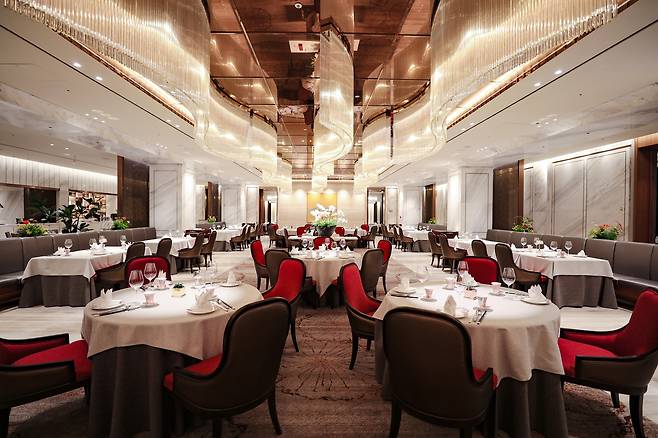
SEOGWIPO, Jeju Island -- Yong Fu, a celebrated Michelin-starred Chinese restaurant originating from Shanghai, opened its first restaurant in Korea at Jeju Shinhwa World, marking the brand’s official debut in South Korea.
The original Yong Fu, founded by Weng Youjun, earned one Michelin star and holds the prestigious Three-Diamond designation from the Black Pearl Restaurant Guide -- a Chinese fine-dining standard comparable to Michelin. The Black Pearl Guide classifies restaurants into three tiers, with Three-Diamond restaurants described as "once-in-a-lifetime must-eats." Yong Fu's expansion includes locations in Hong Kong and Singapore, and now, Jeju Island joins the list.
“We are thrilled to bring Yong Fu to Jeju,” said Hwang Wei, CEO of Jeju Shinhwa World, at the restaurant's opening gala dinner on May 15, attended by culinary leaders and media. “Cuisine is a universal language. China and Korea are both countries with rich culinary traditions, and we are proud to share this experience here, using the finest ingredients sourced locally from Jeju.”
Taste of Ningbo and more
Though Yong Fu’s roots are deeply embedded in Ningbo cuisine -- a branch of Zhejiang cooking emphasizing fresh seafood, subtle seasonings and slow braising -- the menu at Jeju goes further. The restaurant integrates classic regional dishes from Beijing, Sichuan and Guangdong, broadening its appeal to diverse palates.
Signature dishes at the Jeju branch include braised abalone in Ningbo-style sauce, spicy Jeju black pork stir-fry and chilled marinated crab with rich umami flavor. The menu also features offerings more familiar to Korean diners, including Peking duck, dim sum, sweet and sour pork in Cantonese style, and the indulgent Dongpo pork.
One of the standout appetizers was a chilled tofu, served alongside marinated monkfish liver with nuts, and a lobster tart topped with caviar. The lobster’s sweetness paired elegantly with the briny pop of caviar, showcasing a refined East-meets-West interpretation.
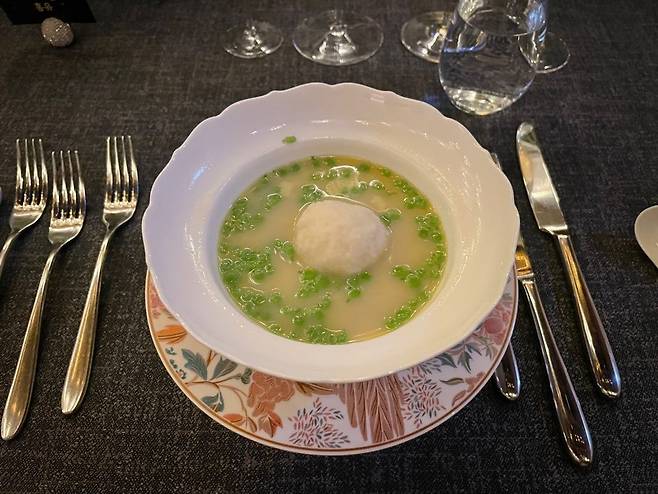
A warm soup of minced hairtail fish balls and sweet green peas used local Jeju fish and crab-based broth for a delicate and cleansing profile. Though slightly under-seasoned, the soup was served in candle-warmed bowls that maintained the temperature to the final spoonful.
Meticulous techniques and regional ingredients
Among the main dishes, the braised abalone using South African abalone was seasoned with a flavor profile surprisingly close to Korean black bean sauce, offering deep sweetness and saltiness. The abalone was sourced from South Africa rather than Jeju due to their larger size. However, the abalone's slightly fishy aroma may not appeal to all Korean palates.
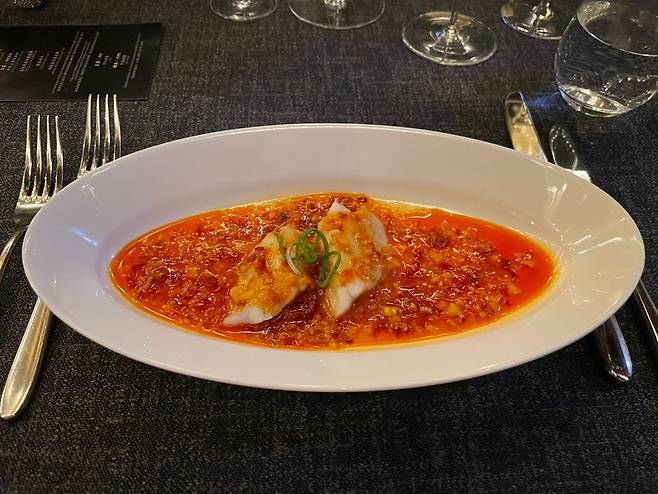
Another main dish featured steamed yellow croaker caught off Jeju’s coast, prepared with a fermented Doubanjiang sauce made with lychee. The sauce was mildly spicy and sweet, likely to be popular with younger or less spice-tolerant diners. The fish was steamed at low temperature to preserve its juiciness and subtle aroma.
A more robust dish was the Sichuan-style beef made with aged tangerine peel and locally sourced Hanwoo beef. It arrived well-done, uncommon in fine dining, but the texture and flavor evoked a Chinese twist on Korean tteokgalbi. It was hearty, peppery and rich in umami.
The tofu casserole with clams and caviar impressed with its delicate balance. Silken tofu, handmade using traditional techniques, soaked up a clear shellfish broth made from Jeju clams and replete with tiny Asian clams known as jaecheop in Korean. The touch of caviar added a luxurious, saline punch that elevated the dish from humble to haute.
Finishing strong
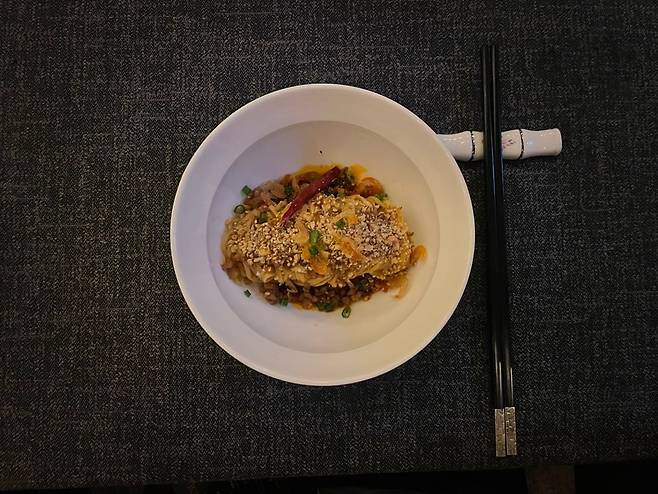
The meal concluded with a bowl of dandan noodles -- light, nutty and comforting -- and a final flourish: the Ningbo-style tangyuan. These glutinous rice balls, filled with sweet black sesame paste, floated in a fragrant chrysanthemum tea. It was aromatic and not overly sweet -- an elegant finale that encapsulated Yong Fu’s ethos of refined simplicity.
The restaurant's decor matches the opulence of its food. Dominated by bold red and gold tones and anchored by a large, wave-like cylindrical installation, the dining space feels both traditional and modern.
For the grand opening, Yong Fu’s founder Weng Youjun personally curated the menu. “Yong Fu is more than one flavor or one region,” he said. “It is the essence of Chinese fine dining, and now we bring it to Jeju, combining the best local ingredients with the depth of Chinese culinary heritage.”
With its commitment to premium ingredients, authentic technique and multi-regional offerings, Yong Fu promises to become a culinary landmark in Jeju's fine dining scene.
The restaurant offers both set menus and a la carte selections. The lunch set menu is priced at 48,000 won ($35) per person, while the dinner set is 78,000 won per person.
Copyright © 코리아헤럴드. 무단전재 및 재배포 금지.