Emart sells out 30 tons of Thai webfoot octopus in one month
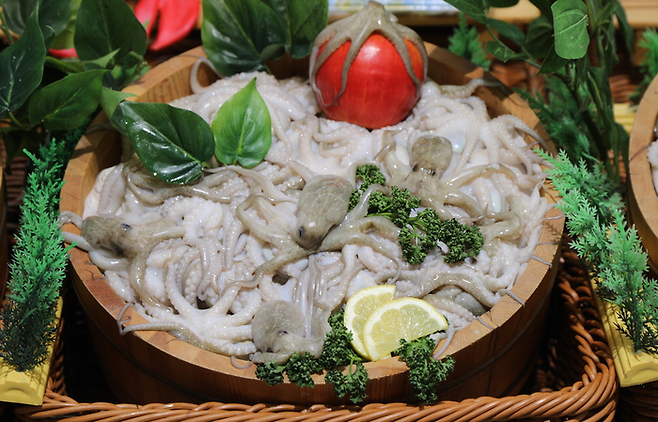
According to Emart on Sunday, the retailer began importing Thai jjukkumi in March through a consolidated procurement strategy involving Emart Traders and Emart Everyday.
The company brought in 30 tons last month alone, which sold out entirely after the product was launched as a half-price promotion.
An additional 10 tons were sold from April 1 to 9.
“By being the first in the industry to introduce integrated purchasing, we significantly increased our procurement volume and negotiation power,” said an official from Emart.
In July 2024, Emart unified the operations of Emart Traders and Emart Everyday with its main retail unit.
This shift aimed to replace the previous model, in which the three entities procured products separately, with a joint purchasing system that maximizes cost efficiency.
By importing large volumes via air freight and distributing them simultaneously across all locations, Emart was able to enhance its price competitiveness.
Since March, the retailer has been importing over 30 tons of Thai jjukkumi each month, flying in about one ton every two days—and up to four tons every two days during promotional periods.
Currently, the Thai jjukkumi sold through Emart‘s three retail arms is priced at just 1,980 won ($1.4) per 100 grams—less than half the cost of domestic jjukkumi, which has surged to record highs.
Wholesale prices for local jjukkumi have climbed above 60,000 won per kilogram, putting them in the same price range as luxury seafood items such as octopus, king crab, and black porgy.
According to data from the Ministry of Oceans and Fisheries, domestic jjukkumi production has been declining rapidly, dropping from 4,306 tons in 2020 to 2,957 tons in 2022 and 2,361 tons in 2024.
Copyright © 매일경제 & mk.co.kr. 무단 전재, 재배포 및 AI학습 이용 금지
- [단독] 현금 109억으로 한남더힐 매입한 인물...정체 알고보니 ‘끄덕’ - 매일경제
- “몸에 좋은 과일을 갈아 마시는 건 최악”…의학박사의 섬뜩 경고, 왜? - 매일경제
- 오늘의 운세 2025년 4월 14일 月(음력 3월 17일) - 매일경제
- “결혼식 했지만 혼인신고 NO”...김영철, 미모의 변호사와 소개팅 - 매일경제
- [속보] 출마설 일축했던 韓 대행 “제게 부여된 마지막 소명 다할 것” - 매일경제
- 그렇게 큰소리치더니…대통령 자존심 무너진 트럼프, 한발 물러선 까닭은 - 매일경제
- [속보] 윤석열 전 대통령 오전 재판 종료…오후 2시 15분 재개 - 매일경제
- 미국 주부 홀린 한국기업...1위 굳히기 위한 ‘비장의 수’ 던졌다 - 매일경제
- 박나래 ‘55억 집 도난’ 용의자 체포됐다···“내부 소행 아니다” - 매일경제
- 이정후, 이번에는 역전 스리런! 빅리그 첫 멀티 홈런 작렬 - MK스포츠