Like the smell of rain, the scent of Jongno lingers in the memory
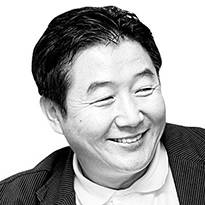
Kim Dong-ryul The author is a professor at Sogang University.
There’s a scent on the streets of Seoul. Though I was born and raised in the countryside, years of living in the capital have made me a true Seoulite. So much so that I can now distinguish the unique smells of each neighborhood. Gangnam has its own scent — sophisticated, even indulgent. The district’s nightlife dazzles with vibrant energy. Streets lined with brilliant LED lights radiate youth and luxury. Even the air feels seductive. The scent of wealth hangs unmistakably in the air.
On the other end of the city lies its opposite: Jongno 3-ga in northern Seoul. Here, the scent is of soju poured into small shot glasses. Locals once called the area “Jong-sam.” Home to Tapgol Park and the Jongmyo Shrine, the streets are frequented mostly by elderly men in worn clothing. They are poor, from across Gangbuk, and they gather here for many reasons—free meals, impromptu street performances or to peddle low-cost goods from roadside stalls. A walk through this neighborhood feels like stepping into a time capsule. You’ll still find set menus for 2,000 won ($1.36) and signs that read, “Unlimited side dishes, makgeolli sold here,” shilling the traditional Korean rice wine. A haircut costs just 5,000 won.
On especially lonely days, I sometimes go there to get my hair cut. My kids assume I go to a fancy salon. If you want your hair washed, it’s an extra 500 won. It’s probably the last place where a 500 won coin still holds any weight.
Jongno’s scent is unlike any other — it carries the fatigue of life. It’s a smell you won’t find in Apgujeong or Cheongdam. Jongno is more than just a street; for Korea’s baby boomers, it’s an object of memory, a trigger of nostalgia. They were born in rural towns, attended middle and high school in nearby cities, and then came to Seoul for college. Back then, they lived in cramped boarding houses. Most of their social lives — blind dates, drinking nights — revolved around Jongno.
![Ikseon-dong Hanok Street in Jongno District, central Seoul. [JOONGANG ILBO]](https://img1.daumcdn.net/thumb/R658x0.q70/?fname=https://t1.daumcdn.net/news/202503/26/koreajoongangdaily/20250326174225322ifno.jpg)
After a few drinks, they’d sometimes head to Sinchon for round two. This was before the days when Hongdae and Gangnam became hotspots. For Korea’s middle-aged and older generations, Jongno is a street etched with meaning.
There’s a song that comes to mind whenever I walk its lanes: “Yesterday, I walked alone / Through rain-soaked Jongno streets.” It’s from Lee Jang-hee’s “It Was You”(1989).
On lonely, melancholy days, it’s worth taking a walk through Jongno. Translated using generative AI and edited by Korea JoongAng Daily staff.
Copyright © 코리아중앙데일리. 무단전재 및 재배포 금지.
- Kim Soo-hyun's fan event in Taiwan canceled amid scandal
- Constitutional Court dismisses impeachment of Korean prime minister — as it happened
- LIVE: Lee Jae-myung acquitted by Seoul High Court
- 'Under 15' producers defend controversial K-pop competition, but will 're-edit' the show
- Han Jong-hee, Samsung CEO, dies at 63
- Historic Buddhist temple Gounsa incinerated in Uiseong wildfire
- Korea face more disappointment in 1-1 draw with Jordan — as it happened
- How Hyundai's $21 billion pledge could shield it against Trump's tariffs
- U.S. Embassy in Seoul issues alert to American citizens over doctor shortage
- Koreans skeptical as Chinese envoy repeats claim that Yellow Sea structures are for fisheries