Complex twists in simple lines: Vincent Huguet, Pierre Yovanovitch reimagine 'The Marriage of Figaro'
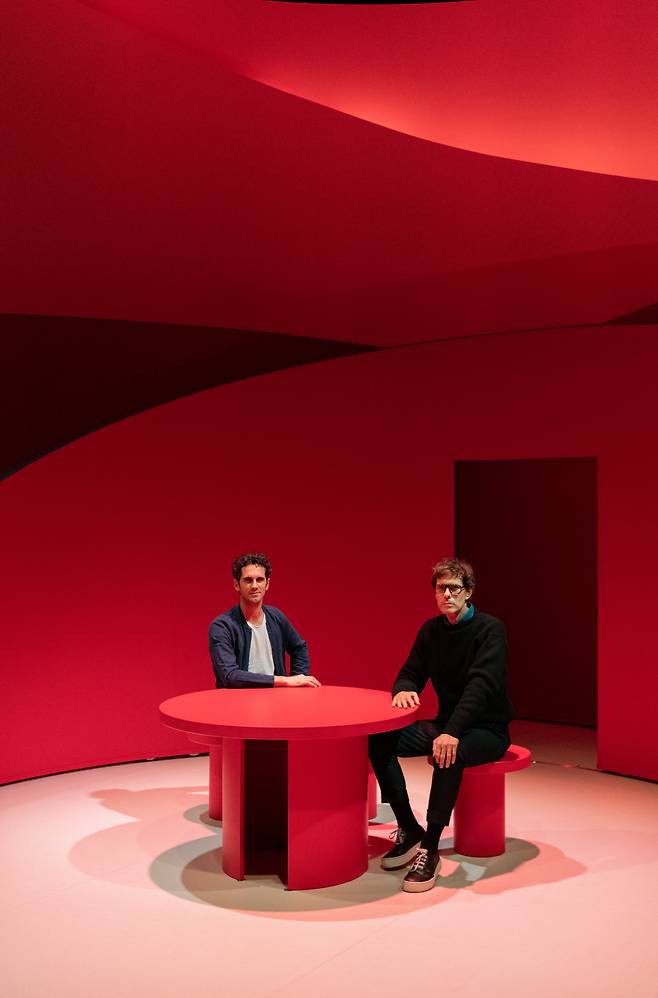
The Korea National Opera opened its 2025 season last week with Mozart's comedic masterpiece, "The Marriage of Figaro," directed by Vincent Huguet with set and costume design by Pierre Yovanovitch.
Hailing from France, the two brought a distinctly French sensibility to Seoul. Though the location didn't specifically shape their vision, he welcomed the opportunity to step outside his comfort zone, Huguet told The Korea Herald last week, adding that it was "exciting" to bring a bit of France to Korea through his interpretation.
Set to music by Mozart, "The Marriage of Figaro" was written by Italian writer Lorenzo Da Ponte, adapted from the French play by Pierre Beaumarchais.
The opera unfolds over the course of 24 hours, centering around Figaro, valet to Count Almaviva, and his fiancee Susanna as they prepare for their wedding.
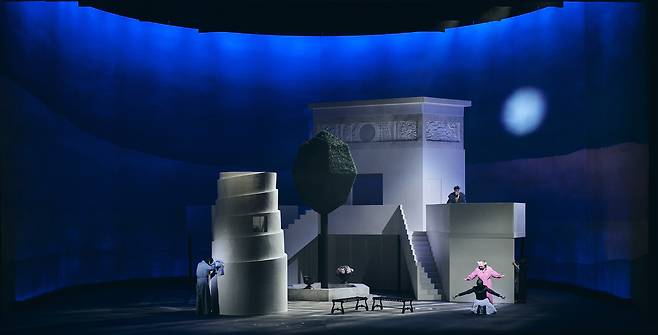
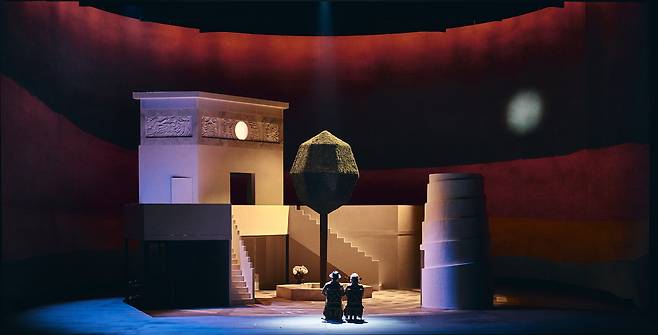
For the opera known for intricate plot twists, mistaken identities, clever disguises, overlapping romantic intrigues and layered social commentary, Huguet and Yovanovitch created a stage that reflects structural simplicity and timeless elegance, blending clean lines with geometric touches.
"Because of my background in studying history, I have a tremendous respect for the operas that I’m staging. My role is to honor the original while offering an interpretation that resonates with the present," Huguet said, adding that he is not that much interested in taking bold creative liberties with the interpretation of the work.
“It's about returning to the essence of the work — what moves us — and building something meaningful from that foundation,” he added.
Huguet made his opera directorial debut in 2012 with Delibes' "Lakme" at the Opera National de Montpellier. Between 2021 and 2022, he directed Mozart’s entire "Da Ponte trilogy" — "Cosi fan tutte," "The Marriage of Figaro," and "Don Giovanni"— at the Berlin State Opera.
Still, Huguet emphasized the need for fresh aesthetics to help connect opera with younger audiences, especially as the traditional opera-going demographic continues to age.
To bring a new aesthetic, Huguet and Yovanovitch collaborated for a second time.
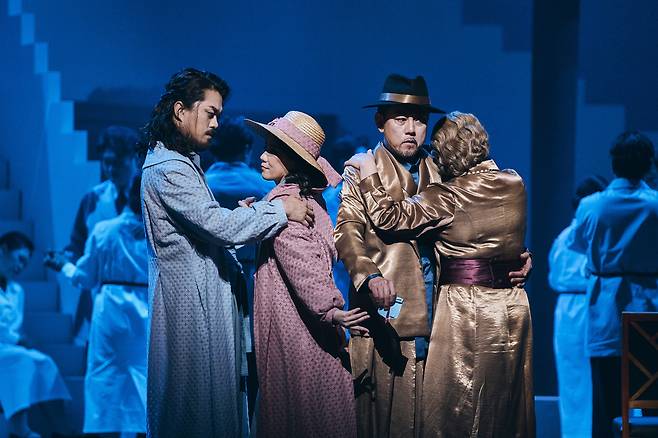
Yovanovitch, an internationally renowned designer, fulfilled a personal dream by venturing into opera stage design. For “The Marriage of Figaro,” which is Yovanovitch’s first time creating costumes, the designer drew inspiration from both France and Korea.
For the latest production, the two artists drew inspiration from Ziggurat, an ancient Mesopotamian temple tower, and Villa Noailles, a 1920s iconic early modernist house in southeastern France. This design choice underscores the timeless elegance and clarity of modernist aesthetics, providing a clean, structured visual frame for the complex narrative, according to Yovanovitch.
Huguet added that the set design was also inspired by Bong Joon-ho’s Oscar-winning film "Parasite," in which stairs symbolically represent the division and movement between social classes.
The stage light reflected the events of the single day, with lighting used to mimic the changing position of the sun. Against a backdrop of gentle curves and empty walls, the lighting captured the passage of time with poetic subtlety. Huguet noted that the garden scene at the opera’s end is both the most beautiful and the most important space in the entire production.
The opera unfolded dynamically through a rotating stage at the center, which changed along with the distinct scenes of the opera.
The custom designs also reflected the essence of the story.
“Depending on the light and depending on the angle, the costume design could be absolutely French or absolutely Korean but it's never one or the other. Just as ‘The Marriage of Figaro’ is on the edge, and never black or white,” said Huguet.
Copyright © 코리아헤럴드. 무단전재 및 재배포 금지.