Rare legal document of Joseon Dynasty loses treasure status after it turns out to be stolen property
이 글자크기로 변경됩니다.
(예시) 가장 빠른 뉴스가 있고 다양한 정보, 쌍방향 소통이 숨쉬는 다음뉴스를 만나보세요. 다음뉴스는 국내외 주요이슈와 실시간 속보, 문화생활 및 다양한 분야의 뉴스를 입체적으로 전달하고 있습니다.
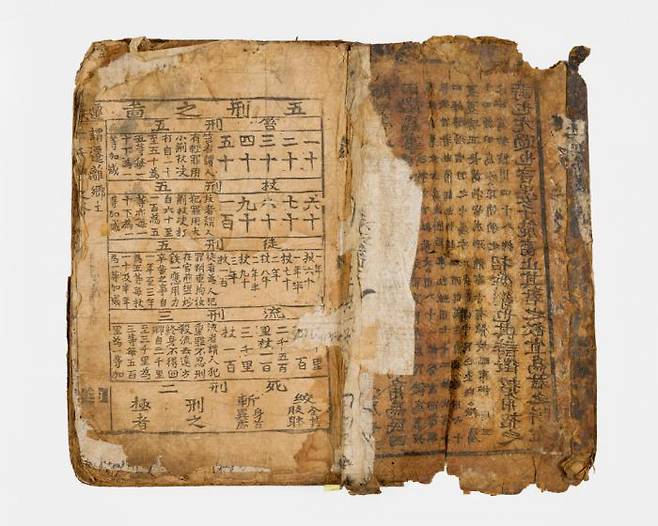
The controversial treasure designation of "Daemyeongnyul,” a legal text of Joseon Dynasty (1392–1910), also known as “The Great Ming Code,” was revoked as it had been reported stolen before its designation. This is the first time in Korea that the designation of or state-designated cultural assets has been canceled.
According to the Korea Heritage Service on March 11, the committee for movable cultural heritage held a meeting on February 13 to discuss and approve the plan to revoke the treasure designation of “Daemyeongnyul.” The agency said on the same day that it had informed local governments of its plan to cancel the treasure designation and publicized the plan on its website, and that it would announce the cancellation on its website and official gazette next month. It has been nine years since the manuscript was designated as a national treasure in July 2016.
“Daemyeongnyul” has been regarded as the basis of the panel code of the Joseon Dynasty. It is believed to have been published in 1389 as a panel code (legal system on crimes and punishments) book of the Ming Dynasty in China. It is a rare book with no known surviving copies in Korea or abroad.
However, “Daemyeongnyul” was mired in controversy within four months of its designation as a national treasure. In 2016, it was identified as an “artifact” by the Gyeonggi Northern Police Agency during the arrest of thieves who stole cultural heritage from temples, historic sites, and old houses. In 1998, Yuksindang seodang, founded by the Munhwa Ryu family who held “Daemyeongnyul,” reported that 81 cases and 235 artifacts, including building signs and old books, were stolen to the local government.
According to the investigation at the time, Mr. A, who ran a private museum in Yeongcheon, North Gyeongsang Province, bought “Daemyeongnyul” from an artifact dealer in May 2012 for 15 million won, and in October of the same year, he requested the manuscript be designated as a national treasure at the Korea Heritage Service. He falsely claimed that he had “inherited it from his predecessor,” and after more than two years of investigation and review, the agency designated and announced it as a national treasure. However, when it was discovered that he had bought the artifact, he was charged with violating the Cultural Properties Protection Law, and in April 2022, he was sentenced to three years in prison.
After the court ruling, the authorities reportedly considered canceling the designation. The Korea Heritage Service admitted that there was a defect in the process of designating the book as a national treasure and decided to revoke the designation based on the Basic Administrative Law, which allows for the revocation of illegal or unjustified actions.
In some cases, treasure designation was lifted if the value of a national treasure or state-designated cultural assets was judged to have fallen after the designation, but this is the first time that the designation of a national treasure was canceled due to a problem in the designation process. Currently, “Daemyeongnyul” is housed at the National Palace Museum of Korea.
※This article has undergone review by a professional translator after being translated by an AI translation tool.
Copyright © 경향신문. 무단전재 및 재배포 금지.
- [단독]스타벅스 ‘탱크데이’ 논란 속…국힘 대선캠프 청년혁신위원장 출신 “5·18은 폭동”
- [단독]“불교계 눈물나게 고마워”···‘1박 90만원’ 부산 BTS 공연 바가지 숙박비에 절에서 팔
- “이 음식, 왜 하필 지금 당길까”···입맛 때문이 아니었다?
- 배우 김규리씨 자택 침입해 강도질 40대 검거
- ‘피아노과 85학번’ 김혜경 여사, 자랑스러운 숙명인상 수상…은쌍가락지 기부도
- ‘초접전’ 대구…‘샤이 김부겸’이냐 ‘샤이 보수’냐
- 추풍령휴게소에서 소방서 버스가 나무 들이받아··· 소방대원 11명 다쳐 병원 이송
- 이 대통령, ‘강남 아파트 중국인 싹쓸이’ 보도에 “가짜뉴스 엄중 책임 물어야”
- 뉴스타파 “김두겸, 취재진 폭행”…김두겸 “사실 왜곡, 고발할 것”
- 노모 손 빌려 삭발한 박민식…“배신의 정치 발 못 붙이도록 결사항전”