Editorial: Pension and inheritance tax reforms must be addressed before political chaos deepens
이 글자크기로 변경됩니다.
(예시) 가장 빠른 뉴스가 있고 다양한 정보, 쌍방향 소통이 숨쉬는 다음뉴스를 만나보세요. 다음뉴스는 국내외 주요이슈와 실시간 속보, 문화생활 및 다양한 분야의 뉴스를 입체적으로 전달하고 있습니다.
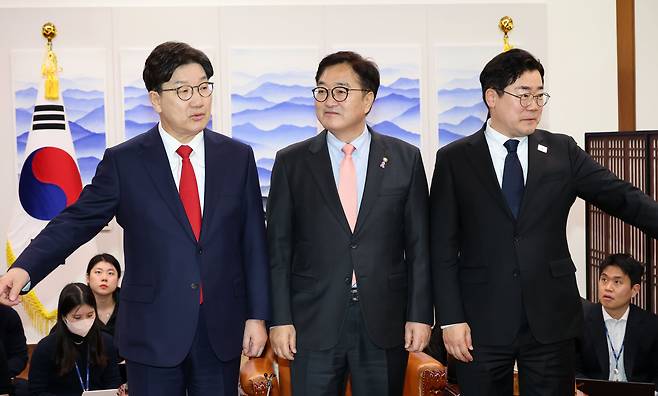
The ruling and opposition parties in South Korea met on March 10 for a National Affairs Council meeting, but it ended in just 30 minutes with no results. The People Power Party proposed a 43% income replacement rate for National Pension reform, while the Democratic Party of Korea insisted on 44%. This disagreement caused discussions on other issues, like the supplementary budget, to fall apart.
Issues like inheritance tax, the supplementary budget, and the semiconductor special law, which directly affect people’s lives and the country’s future, need to be discussed regardless of the political situation. It’s important to deal with what can be agreed upon first. However it seems like in S. Korean politics, such common sense doesn’t always apply.
On inheritance tax reform, the two parties are quite close. Democratic Party leader Lee Jae-myung suggested that the People Power Party’s proposal to abolish the inheritance tax on spouses should be addressed quickly. The inheritance tax exemption limit has remained unchanged since 1997, and while this change may not be a complete reform, it would be wise to act on the areas where agreement is possible.
Additionally, on National Pension reform, the two parties have very similar views. Both agree on raising the contribution rate from 9% to 13%. The only difference is a 1% gap in the income replacement rate, which, although small, is holding up the reform. The debate over the overall parameters of the reform remains a sticking point.
The National Pension fund already has a daily deficit of 88.5 billion won ($60.6 million), adding up to about $21.9 billion deficit annually. If the reform is delayed over a 1% difference, it would be hard to justify. It seems as though both parties are reluctantly pushing forward, pretending to act while looking for an excuse to back out, given the unpopularity of the changes.
The supplementary budget and semiconductor special law also cannot be delayed much longer. Currently, there is little political cost to pushing for reforms, making this the best time to address tough but necessary changes. If not now, the opportunity for improvements may not come again.
Soon, the Constitutional Court will rule on the president’s impeachment. No matter the outcome, it’s likely to cause political chaos, making reforms even harder. These important issues should be dealt with before that happens.
Copyright © 조선일보. 무단전재 및 재배포 금지.
- 스타벅스에 발목 잡힌 이마트… 2분기 430억 영업손실
- “말라붙거나 녹아내리고 있다”… 가뭄에 애타는 제주 더덕 농가
- “소각장 이전 돕겠다” 협약 맺어놓고 번복한 청주시...대법 “약속 지켜야”
- 경찰, ‘한동훈 당게 사건’ 서버 관리 업체 압수수색
- 추행에 폭행까지… 술 취해 카라반 침입한 30대, 구속
- 광전자·반도체 연구 한자리에… 한국공학대서 171편 발표
- LG, 스켈레톤·아이스하키 후원 2030년까지 늘린다...유망주 육성 프로그램도 신설
- 中 YMTC, 낸드 출하량 첫 3위 진입...삼성·하이닉스 양강 체제는 공고
- “호기심에 그랬다”… 텀블러에 소형 카메라 숨겨 여성 탈의실 훔쳐본 소방관
- ‘도이치 주가조작 공범’ 유죄 확정... 징역형 집행유예