Young Koreans gripped by fear of decline in a super-aged, deindustrializing society
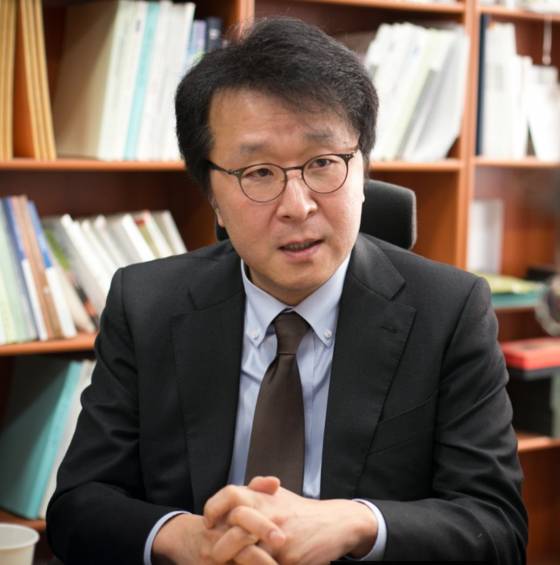
Chang Duk-jinThe author is a sociology professor at Seoul National University.
“Welcome to a super-aged society.”
This may very well be the greeting for New Year’s Day in 2025. Last year, Korea’s population aged 65 and over surpassed 20 percent, marking the beginning of its era as a super-aged society. Standing atop a steep height and looking down often triggers a feeling of dizzying fear. Some experience this so acutely that they require therapy — a condition we might call “downhill phobia.” Entire societies or generations can experience this phenomenon, and the dual forces of rapid aging and deindustrialization are driving Korea into such a descent.
The group most acutely affected by this “downhill phobia” is the younger generation, who will have to live most of their lives in this precarious reality. Discussions about Korea’s so-called MZ generation (Millennials and Gen Z) have been ongoing for years now. While these observations are often cloaked in curiosity, they frequently carry negative undertones. Common perceptions of the MZ generation include their individualism, willingness to spend on what they want, sensitivity to fairness and openness to changing jobs. Rephrased less charitably, this translates to accusations that they are selfish, financially reckless, nitpicky, and ungrateful to employers who invest in their development.
But why are they so different from older generations? It’s not as if the DNA of Koreans has suddenly mutated, nor can this simply be attributed to the distractions of modern technology. Young people in other countries exposed to similar technological environments exhibit markedly different behaviors.
Through candid conversations with my students in their twenties, I discovered a shared underlying sentiment: fear. This word was surprising — how could the most advanced Korea in history evoke fear? But understanding their perspective wasn’t difficult.
When I was born, Korea’s GDP per capita was just over $100. By 2024, it is expected to surpass $40,000, overtaking Japan. My generation has lived through an astonishing 400-fold economic growth. In the 1970s, Korea’s national goals included “$10 billion in exports and $1,000 in per capita income.” Today’s older generation experienced life at $100, $1,000, $10,000, and now $40,000, climbing steadily upward for over five decades. By contrast, today’s young people have never known a day without air conditioning and are now confronting projections of Korea’s first decline.
As a manufacturing powerhouse, Korea has struggled to find new growth engines in a post-industrial era. Meanwhile, the super-aged society places increasing pressure on the working population to support a rapidly growing elderly demographic. For the first time, polls show a majority of Koreans believe the next generation will be worse off than the current one. These young people now face the prospect of living in a downhill society, a prospect that fills them with dread. Having never experienced life without modern comforts, they cannot fathom a night without air conditioning — a chilling metaphor for their existential “downhill phobia.” Korea has climbed so high that the descent feels all the more terrifying. Older generations, having known only upward trajectories, struggle to comprehend this fear.
This fear manifests in extreme self-protection, shaping much of their behavior. Today’s students are hyper-conscious of university rankings. They evaluate schools, majors, and even admissions pathways, dismissing those perceived as “inferior.” Online forums are rife with posts listing one’s appearance, family background, alma mater, job, and salary, seeking validation of their rank in the social hierarchy. It’s obsessive. Despite decades of campaigns to dismantle Korea’s rigid academic hierarchy, the younger generation has internalized and even intensified these rankings. It’s a desperate scene, reminiscent of passengers on a sinking ship scrambling to secure a position in the limited air pocket. The trend of flaunting one’s department jacket is an extension of this survival-driven status signaling.
The recent backlash from medical students over increasing enrollment quotas illustrates this dynamic. While the government’s policy was undoubtedly flawed, other universities and departments often bear the brunt of unreasonable policies without such outcry. The medical students’ fierce resistance reveals their awareness of the hard-fought status they hold in this competitive hierarchy. It’s difficult to ignore the underlying fury: how dare the government touch the pinnacle of this precarious order?
Older generations, preoccupied with being politically correct, have failed to address this “downhill phobia” head-on. This inaction stems, in part, from a shared complicity — they’ve raised their children to value the same metrics of success. However, treating young people fairly is not the same as abdicating the responsibility of leadership. Korea must now develop the leadership to flatten the downhill slope or instill the resilience to navigate it without fear. This is the pressing challenge as the nation enters its first year as a super-aged society.
Translated using generative AI and edited by Korea JoongAng Daily staff.
Copyright © 코리아중앙데일리. 무단전재 및 재배포 금지.
- 'Squid Game' actor Park Sung-hoon apologizes for uploading lewd image on Instagram
- K-pop acts still set to perform at New Year's music event in Japan despite mourning period
- Song Joong-ki halts promotions for film
- Explainer: Embankment bearing brunt of blame in Jeju Air crash
- [WHY] Why did Yoon declare martial law? Korea's political YouTubers might be to blame.
- Second Jeju Air plane experiences landing gear malfunction, same Boeing model involved
- K-pop physical album sales bubble bursts to fall 19%
- Korean chip firms to shift from China on U.S. probe into market flooding: experts
- Seeing in the New Year: Great spots to watch the first sunrise of 2025
- Year of the Blue Snake begins with birth of three babies at midnight