S. Korean ‘Big 3′ shipbuilders thrive on high-value deals despite Chinese competition
이 글자크기로 변경됩니다.
(예시) 가장 빠른 뉴스가 있고 다양한 정보, 쌍방향 소통이 숨쉬는 다음뉴스를 만나보세요. 다음뉴스는 국내외 주요이슈와 실시간 속보, 문화생활 및 다양한 분야의 뉴스를 입체적으로 전달하고 있습니다.
South Korea’s “Big 3″ shipbuilders, including Hanwha Ocean and Samsung Heavy Industries (SHI), are maintaining a selective approach to new orders, focusing on high-value vessels that keep their docks full. The shipbuilding industry believes Korean firms are enjoying such strong demand that forgoing low-cost, high-volume orders isn’t considered a significant loss.
On Sept 30., sources from the shipbuilding and shipping sectors reported that Germany’s Hapag-Lloyd recently placed an order for 24 dual-fueled liquefied natural gas (LNG) container ships, which are expected to be built by Chinese shipyards. Despite bids from HD Hyundai Heavy Industries (HD HHI) and Hanwha Ocean, Hapag-Lloyd awarded the contract to Chinese shipbuilders due to their competitive pricing. The total order value is estimated at $4.2 billion (about 5.58 trillion won).
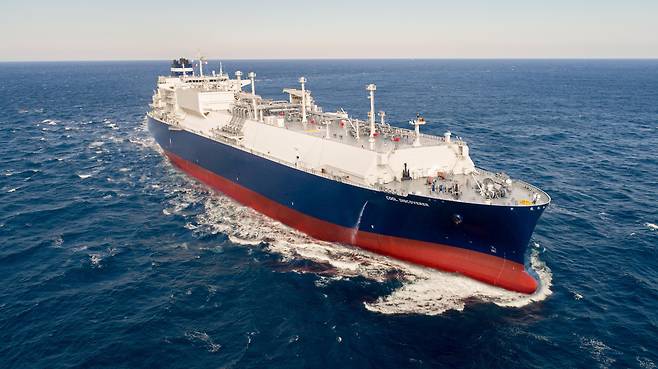
However, domestic industry insiders see no reason for concern. Hapag-Lloyd’s order includes 17,0000-TEU and 9,200-TEU container ships—lower-cost vessels that Korean shipyards, operating at near full capacity, find less appealing. High-volume orders like this limit yard space and prevent builders from taking on more profitable projects. The 17,000-TEU vessels are priced at approximately $200 million each, while the 9,200-TEU ships are about $140 million each.
An industry insider commented, “There’s talk of Chinese competition catching up to Korean shipbuilders, but that’s not the case here. It was more of a formality for Korean companies to participate in the bid. The order scale isn’t ideal for them, and given current market prices, it makes sense to pass on low-cost orders.”
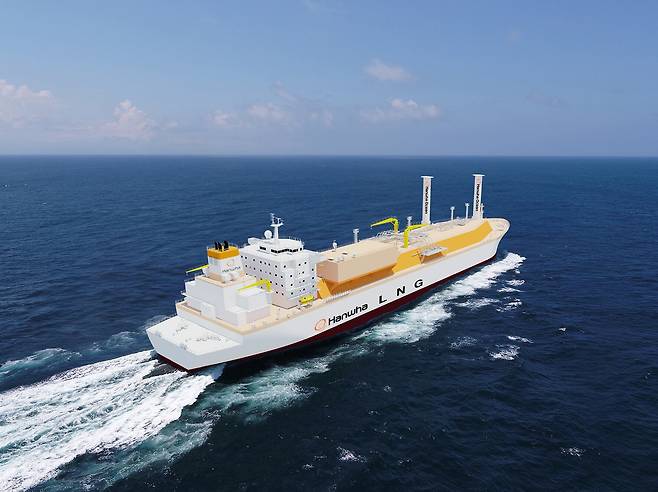
Korean shipbuilders continue to focus on high-value ships like LNG carriers, very large crude carriers (VLCCs), and ultra-large container ships between 220,000 and 240,000 TEU. As of August, LNG carriers were priced at $262 million, VLCCs at $129 million, and ultra-large container ships at $273 million.
Additionally, there is a growing demand for green vessels as Europe tightens environmental regulations. This has boosted the market for eco-friendly ships. The price for a 174,000-CBM LNG-powered carrier rose to $262 million (around 348.8 billion won) in August, an 11% increase compared to last year. According to Clarksons Research, as of late July, Korean shipbuilders held 252 out of the 355 global backorders for LNG carriers—about 70% of the total.
Korean companies also have solid order books. HD Korea Shipbuilding & Offshore Engineering has secured contracts for 160 vessels (including one offshore project) worth $17.78 billion (23.44 trillion won) so far this year, surpassing its annual target of $13.5 billion with 131.7% achievement. Hanwha Ocean, by the second quarter, had secured $5.33 billion (7 trillion won) in ship orders, exceeding last year’s total. SHI is also expected to surpass its annual order target of $9.7 billion.
Copyright © 조선일보. 무단전재 및 재배포 금지.
- [속보] 트럼프 “대만 문제 해결 위해 라이칭더 총통과 대화할 것”
- [속보] 삼성전자 노사, 파국은 면했다... 총파업 90분前 잠정 합의
- ‘황금빛 신라’에 열광하는 파리 “은자의 나라는 없었다”
- 여름비 같은 봄비 쏟아진다... 경기·강원에 호우주의보
- 종합특검, 尹 ‘반란 혐의’ 피의자 소환 조사…내달 6일·13일
- 일주일 만에 또 차량 훔친 초등생… 친구 아버지차 몰았다가 붙잡혀
- 공동응원단, 北측 골에 더 큰 함성... 수원FC 감독 “섭섭했다”
- ‘신세계 장녀’ 애니, 컬럼비아대 졸업…“팬들 사랑해”
- 가세연 김세의 구속 기로… 배우 김수현 명예훼손 혐의
- 女축구 수원 통한의 PK 실축... 北, 인공기 펼치며 웃었다