Deliberate noise punished as stalking for 1st time
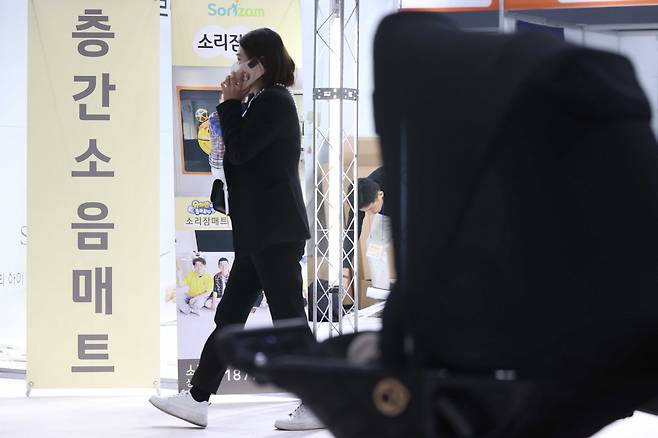
The Supreme Court on Thursday upheld a ruling by a lower court that issued a suspended jail term for stalking to a man who deliberately made noise to pester his neighbor, marking the first time for South Korea's highest judicial body to decide such a crime constitutes stalking.
The defendant in his 30s was sentenced to eight months in prison, suspended for two years, on charge of stalking, which the Act on Punishment of Crime of Stalking stipulates can be punishable by up to three years in prison or 30 million won ($23,000) in fines.
According to the court, the plaintiff had made noise with intent to harass his upstairs neighbor 31 times from Oct. 22 to Nov. 27, 2021, inside his home at a multihousehold residential building in Gimhae, South Gyeongsang Province. The investigation found that he had pounded the ceiling, played gospel songs loudly and shouted while playing video games, mostly in the early hours of the day.
The verdict from a lower court stated that the video and other pieces of evidence provided by the victim were enough to prove that the defendant made the noise deliberately for his neighbors to hear.
"Interfloor noise emitted during a dispute between neighbors would not constitute stalking in itself. ... But judging by the relationship between the defendant and the victim, his specific actions and reasons behind it and other factors related to the matter show that what the defendant did are continuous and repeated actions to cause anxiety and fear of the other person, and thus can be considered stalking," the Supreme Court said in its ruling.
It also pointed out that his actions forced several neighbors to move out of the building, and his refusal to talk to police officers called to the scene indicated that his intentions were to harass them rather than to reach a reasonable settlement.
While "making noise" is not one of the actions specified in the anti-stalking act, the law defines stalking as actions that cause another person anxiety or fear without good reason.
Thursday's ruling is the first time that the Supreme Court has directly stipulated that making noise can constitute a stalking crime, setting a precedent for similar legal cases.
Interfloor noise is a serious issue in South Korea, where most households are in shared buildings. According to the Seoul Research Data Service, 59 percent of the homes in Seoul are apartments, while another 29.6 percent live in multihousehold residential buildings.
On Monday, the government said that it will not authorize the completion of new apartments unless the interfloor noise levels meet standards set by authorities.
By Yoon Min-sik(minsikyoon@heraldcorp.com)
Copyright © 코리아헤럴드. 무단전재 및 재배포 금지.