Spike in carbon dioxide may further unsettle Korean factories due to short supply
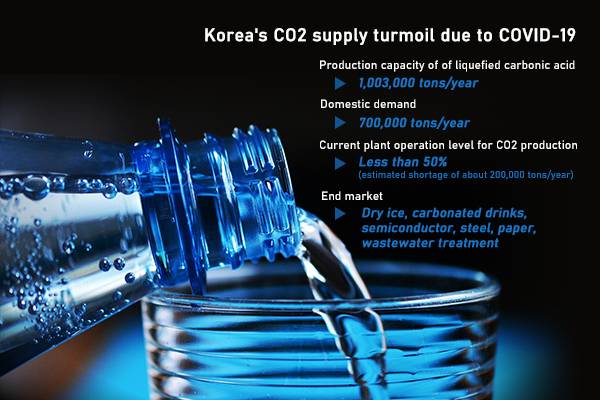
According to Korea High Pressured Gas Association on Thursday, the average price of the CO2 gas, often called carbonic acid gas, soared about 30 percent in the past few months as the pandemic continues to force local refinery and petrochemical plants to run at less than 50 percent capacity.
CO2 generated in the process of crude oil refining or plastic production as a by-product is pipelined to nearby carbonic acid manufacturers, which refine and liquefy it for companies to make beverages, dry ice or other products.
Korea is estimated to produce 1,003,000 tons of liquefied carbonic acid per year for the local market whose demand reaches 700,000 tons. But given the current output level, the end market will face a shortage of about 200,000 tons per year, the association said.
A high-pressure gas company official said that the price of industrial carbon dioxide jumped by 20 to 30 percent due to a sharp supply drop. The deficiency is expected to last throughout the summer when seasonal demand for frozen and chilled consumer products rise.
The bigger problem is industrial demand. Carbonic acid gas is used not only in carbonated beverages, but also in various fields such as semiconductor, steel, and paper production, medical treatment, and wastewater treatment.
[¨Ï Maeil Business Newspaper & mk.co.kr, All rights reserved]
Copyright © 매일경제 & mk.co.kr. 무단 전재, 재배포 및 AI학습 이용 금지
- Korean listed projected to have finished Q2 better, bottoming out in Q1
- Hyundai Motor offers limited supercar Stardust Genesis
- Jeju Air¡¯s buyout of Eastar Jet up in the air as Jeju balks at new owner¡¯s duties
- SK Innovation to explore upcyling to produce pyrolysis oil from plastic wastes
- Statutory time-off hours must be counted into minimum wage in Korea
- 강경준, 상간남 피소…사랑꾼 이미지 타격 [MK픽] - 스타투데이
- AI가 실시간으로 가격도 바꾼다…아마존·우버 성공 뒤엔 ‘다이내믹 프라이싱’- 매경ECONOMY
- 서예지, 12월 29일 데뷔 11년 만에 첫 단독 팬미팅 개최 [공식] - MK스포츠
- 이찬원, 이태원 참사에 "노래 못해요" 했다가 봉변 당했다 - 스타투데이
- 양희은·양희경 자매, 오늘(4일) 모친상 - 스타투데이