More than 1mn cancer patients survive at least 5 yrs after diagnosis in Korea
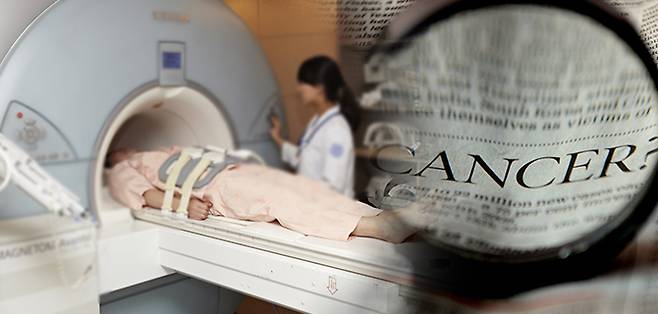
Nearly 1.04 million, or 55.7 percent of all cancer patients survived for five years or longer, the first 1 million milestone since data compilation that began in 1999, according to the 2017 hospital-based nationwide cancer registry recently announced by the Ministry of Health and Welfare.
When cancer survivors hit the 5-year mark, they are very unlikely to experience a relapse.
New cancer diagnoses in 2017 came to 232,255, up by 1,019 (0.4 percent) from 2016. The most prevalent cancer in the country in 2017 was stomach cancer (12.8 percent), followed by colorectal cancer (12.1 percent), lung cancer (11.6 percent), thyroid cancer (11.3 percent), and breast cancer (9.6 percent). Cancer is still a leading cause of death in Korea, responsible for about 26 percent of all-cause deaths. Men were susceptible to gastric cancer, lung cancer and colorectal cancer, while women breast cancer, thyroid cancer and colorectal cancer, the data showed.
The total number of cancer patients in 2017 increased slightly from 2016, but the age-standardized cancer incidence rate per 100,000 population was 282.8, down by 6.6 (2.3 percent) from 2016. The cancer incidence rate increased by 3.7 percent per year between 1999 and 2011 but decreased by 2.6 percent a year after 2011. However, breast cancer, prostatic cancer, pancreatic cancer and kidney cancer have been on the rise since 1999.
The number of cancer patients who continued treatment or fully recovered as of Jan. 1, 2018 after diagnosis between 1999 and 2017 came to 1.87 million, 3.6 percent of Korean population. Thyroid cancer was the most prevalent one in Korea with 405,032 male and female patients (21.7 percent) of total cancer patients.
The five-year relative survival rate between 2013 and 2017 was 70.4 percent, up by 1.3 times from 54.1 percent tallied 10 years ago. Cancer types with an uptick of 10 points from a decade ago in the measure were gastric cancer, liver cancer, lung cancer and prostatic cancer. The cancers with the highest five-year relative survival rates include thyroid cancer (100 percent), prostatic cancer (94 percent) and breast cancer (93 percent), and the lowest include liver cancer (36 percent), lung cancer (30 percent), gallbladder and biliary tract cancer (29 percent) and pancreatic cancer (12 percent).
The five-year relative survival rate for the six most common cancers covered by the national cancer screening program (stomach cancer, colorectal cancer, liver cancer, breast cancer, cervical cancer and lung cancer) in Korea was higher than that in the U.S., Britain and Japan between 2010 and 2014.
[¨Ï Maeil Business Newspaper & mk.co.kr, All rights reserved]
Copyright © 매일경제 & mk.co.kr. 무단 전재, 재배포 및 AI학습 이용 금지
- Korean biotech firms rush to embrace liquid biopsy for personalized medicine
- Kakao to get rid of top trending searches list from portal Daum from Feb
- LG Electronics¡¯ rollable TV unready to hit market this year
- S. Korean Pres likely to return home empty-handed from meetings with Xi and Abe
- Hyundai Livart gains traction through online furniture mall
- 강경준, 상간남 피소…사랑꾼 이미지 타격 [MK픽] - 스타투데이
- AI가 실시간으로 가격도 바꾼다…아마존·우버 성공 뒤엔 ‘다이내믹 프라이싱’- 매경ECONOMY
- 서예지, 12월 29일 데뷔 11년 만에 첫 단독 팬미팅 개최 [공식] - MK스포츠
- 이찬원, 이태원 참사에 "노래 못해요" 했다가 봉변 당했다 - 스타투데이
- 양희은·양희경 자매, 오늘(4일) 모친상 - 스타투데이