One Officer Forced Soldiers to Eat Hunted Goose, Another Forced Subordinate to Stay Up All Night Doing His Wife's Homework
이 글자크기로 변경됩니다.
(예시) 가장 빠른 뉴스가 있고 다양한 정보, 쌍방향 소통이 숨쉬는 다음뉴스를 만나보세요. 다음뉴스는 국내외 주요이슈와 실시간 속보, 문화생활 및 다양한 분야의 뉴스를 입체적으로 전달하고 있습니다.
[경향신문]
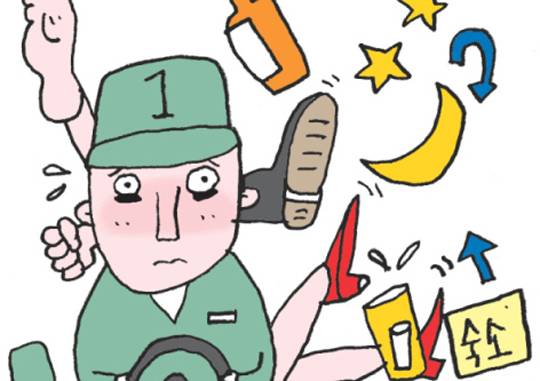
Violence and abuse of power in the military is nothing new. Due to an unreasonable structure that makes the victims suffer disadvantages when they ask for help, this has been one deep-rooted evil that we have not been able to eradicate. The recent case of Captain Bak Chan-ju and his wife, who treated the soldier in his official residence like a slave, has triggered citizens to call out, "It is now time to speak up." On August 8, the Kyunghyang Shinmun received tips on cases of abuse in the military through social network service accounts and e-mail.
A, who introduced himself as an Air Force officer, spoke of a shocking incident of torture with food. A recalled, "B, the leader of the Reserve Officers Training Corps (currently discharged as a captain of the Air Force) at the time, was a man who enjoyed bizarre actions." According to A, "One day, he came to work with a red ice box and inside was a dead goose." B ordered the soldiers to pluck the feathers from the goose, cut the stomach, remove the guts and chop it into pieces in the unit's physical training room and put the pieces on display in the unit's freezer.
A said, "A bullet was embedded in the goose, so I was worried about hygiene, and the smell was so bad that I almost threw up," and described the situation back then.
The members of the unit wondered if B would really make them eat it, but such worries came true. A said, "It (the goose) was cooked into a spicy stew at lunchtime, and one major continued to ask if it was really okay to eat it." A relayed, "B forced the soldiers to eat it saying, 'You guys are young and can digest anything, so you eat first.'" The soldiers had no other choice but to eat the goose.
A said, "The officers followed and ate it, but I think it didn't taste like what they had expected, because most of them threw it out."
That wasn't the only strange thing that B did. He brought live octopus, webfoot octopus and shrimp heads from the beach near the unit and forced the soldiers to eat them. He also forced the soldiers to clean their plates. "If I didn't eat it, it would often go to the other soldiers, like a Russian roulette, so we were under extreme stress," A said.
Gang, who was a counselor in one Army unit, said that the soldiers who drove the "number one car" (cars assigned to the commander) had to act as their chauffers in the middle of the night. Gang said, "In the case of soldiers who drove the number one car, they often complained about the stress from having to suffer verbal abuse from officers or their families drunk after a party telling them to 'drive straight.'" He added, "They often have to drive after being dragged to unofficial gatherings of the officers. In a nearby unit, the soldier who drove the regimental commander's car just drove off and fled. "
Reports of military officers who mobilized soldiers for personal purposes continued to flood in. Gim testified that he had to serve in the grassy fields and forests with the scorching sun shining through last August. Kim said, "For months we collected and pounded wild plants and used devices to measure them. I think it was about a study on the interference of wild plants on military equipment, but even the noncommissioned officer who came along with us to do the research did not know the exact purpose." We could only guess that we were doing the research of an officer for him. Due to orders from the unit's commander, the soldiers were not allowed to cover their arms, so Gim suffered from grass allergy. Gim bitterly said, "It was the soldiers who had to run around the field blindly without knowing why, but that data is now probably someone's research result."
Song said, "When I was working full-time at a dong office in Gwangju, the dong chief ordered a senior soldier, who typed fast, to type the answers of a university textbook his wife used.
The soldier stayed up all night at the office for two days and typed the answers, but even afterwards, the chief wouldn't let him get off work. So he had to sleep on the floor of a storage room and return to work the next morning."
C, who was a military doctor said, "The soldiers are not the only ones to suffer abuse. It's the same with the officers." He confessed that he practically worked as the personal doctor for the division commander's wife and another commander's wife. C also said, "Soldiers who went to good schools before joining the military were often forced to tutor the children of the senior officers. Soldiers who played tennis, skied, played go or who studied art in college often had to teach those skills to the officers' wives. I saw and heard about countless soldiers being used for personal purposes. "
There was also a case where one’s precious son had to be disgracefully discharged after suffering from the violence of his supervisor. Choi said, "My son almost drowned because he looked at the ground once during training. Three soldiers-two sergeants, who were his supervisors, and one lance corporal-threw my son in the water and blocked him from breathing. When my son asked them to save him, they hit his face with their fists and elbows, so when he talks or smiles, his mouth is severely twisted." Choi conveyed the sad story saying, "He (my son) was hospitalized in the nurse's office in the Marine Corps headquarters and after a year was dishonorably discharged after signing a contract promising not to take any legal action. "
Copyright © 경향신문. 무단전재 및 재배포 금지.
- 외국인 BTS 팬들 고기 굽는데 갑자기 불이···옆자리 식사하던 경찰관들이 ‘신속 진압’
- ‘배 한 척에 차 1만대’···현대글로비스, ‘축구장 28개’ 세계 최대 자동차운반선 도입
- [속보]윤석열, 선고 후 변호인단에 “실망 말라”…‘체포 방해’ 항소심 형량 높아져
- 경찰 출석한 인플루언서 양정원 “진실 밝혀지길”…‘수사무마 의혹’에 검경 갈등까지 뭐길
- [단독]장동혁이 만난 미 의원 다수, 쿠팡 ‘집중 로비’ 받았다
- 공터서 쓰레기 태우던 중 불이 몸에 옮겨붙어···70대 숨져
- 윤석열 “해병대수사단 실력 얼마나 된다고 화를 내나”…‘VIP 격노설’ 재판 시작
- ‘국힘 탈당’ 서울시의원 “국민의힘, 미래 대안 될 수 없다”
- 108만원씩 더 썼다···BTS 광화문 공연 보러 온 외국인 아미들의 한국 즐기기
- ‘왕사남’ 단종, 가수로 복귀···박지훈, 3년 만에 신보 발매