Rediscovering the beauty of Korean architecture
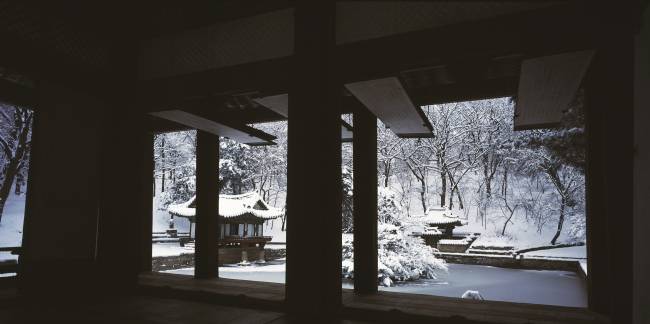
A step inside Changdeokgung Palace at the heart of Seoul after sunset and the city of skyscrapers just seems to disappear.
Moonlight illuminates Joseon era royal buildings standing harmoniously with the surrounding green and natural formations of gardens that reflect its original terrain. Subtle rays from lamps inside the buildings reveal details in geometric window bar patterns and the balanced beauty of roofs and doors.
Such delights of Korean traditional architecture are captured in photographs at the ongoing exhibition “A Homage to Korean Architecture: Wisdom of the Earth” at the Leeum, Samsung Museum of Art.
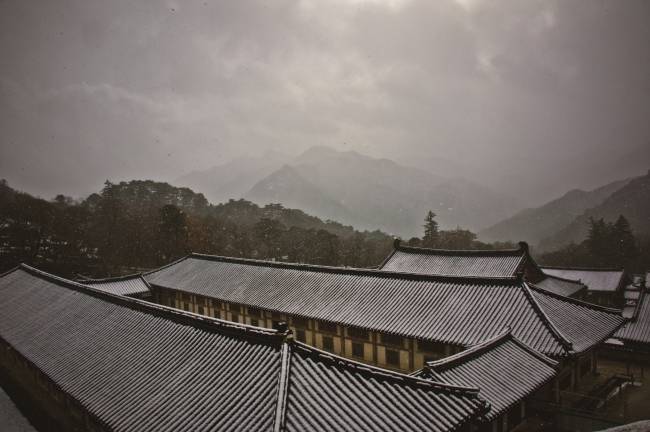
Korean photographers, including Joo Myung-duck, Bae Bein-u and Koo Bon-chang, were commissioned to visit 10 historic buildings and take pictures of them throughout the seasons. The buildings include Buddhist temples, both Haeinsa and Bulguksa; the royal Gyeongbokgung and Changdeokgung palaces; Jongmyo Shrine; the Confucian academy of Dosan Seowon; and the Korean garden of Soswaewon.
According to Lee Joon, deputy director of Leeum, the reason behind opening the exhibition was that Koreans tend to underestimate the value of their own traditional architecture embodying the wisdom of their ancestors.
“Most Koreans are familiar with the Parthenon in Greece, but ignorant of the royal shrine Jongmyo,” he explained. “Koreans have highly regarded Western architecture as the epitome of Western aesthetics, while they fail to see the value of their own traditional architecture.”
The exhibition, featuring some 70 works of photographs, videos, old maps and paintings, guides viewers into the physical and spiritual world of Korean architecture.
Photographer Bae Bein-u, known for his pine tree images, captured the changing sceneries of Changdeokgung Palace through the seasons. Included are lush summer gardens of the palace and snow-covered Buyongji pond in front of the royal library of Joseon Gyujanggak.
A five-minute three-channel video by Park Jong-woo highlights the solemn dignity of Jongmyo Shrine and the dedication of the Joseon era to secure legitimacy and legacies from the late kings and queens for more than 500 years.
The exhibition also explores the early construction of cities and their influence on today’s cityscape. It traces back the formation of the capital city of Seoul to the early Joseon era. Jeong Do-jeon, mastermind of the city planning and a Confucian scholar, carefully selected sites for city walls, royal palaces and the four main gates of the city according to Confucian ideology, an important task that could decide the fate of the nation.
A two-channel video, “Management of Sites: Capital City Hanyang,” by architecture professor Lee Sang-gu shows the transition of the topography of Seoul from the 18th century to the present and how early city planning had a significant impact on the formation and transformation of Seoul.
“Major city roads and formations didn’t change compared to those 200 years ago. But as small roads that spread from main roads changed, the overall topography of the city became lower, with mountains cut and reduced due to city developments,” said Gwak Joon-young, curator of the exhibition.
The exhibition runs until Feb. 6. Tickets range from 5,000 won ($4.30) for teenagers to 10,000 won for adults. Admission is free for youth on weekdays. For more information, visit www.leeum.org.
By Lee Woo-young (wylee@heraldcorp.com)
<ⓒKoreaHerald(www.koreaherald.com)무단전재 및 재배포 금지>
Copyright © 코리아헤럴드. 무단전재 및 재배포 금지.