Live Anthrax Delivered to U.S. Osan Air Base
이 글자크기로 변경됩니다.
(예시) 가장 빠른 뉴스가 있고 다양한 정보, 쌍방향 소통이 숨쉬는 다음뉴스를 만나보세요. 다음뉴스는 국내외 주요이슈와 실시간 속보, 문화생활 및 다양한 분야의 뉴스를 입체적으로 전달하고 있습니다.
A military research center in the U.S. accidentally sent live Bacillus anthracis, more commonly known as anthrax, believing the bacteria to be dead or inactive to the U.S. air base in Osan, and this incident was belatedly disclosed on May 28, five days after it had occurred.
This day the U.S. Forces Korea (USFK) announced that twenty-two lab workers were exposed to the live anthrax, which was inadvertently delivered to the Osan Air Base. According to the USFK no one has yet shown signs of infection. The USFK disposed of the anthrax sample at an emergency quarantine facility according to U.S. Centers for Disease Control and Prevention regulations.
Colonel Steve Warren, the Pentagon's acting press secretary also stated that one anthrax sample had been delivered to the Integrated Threat Recognition Program (ITRP) at Osan Air Base. The ITRP is also known as JUPITR, and is a place that designs response plans to biological warfare.
|
|
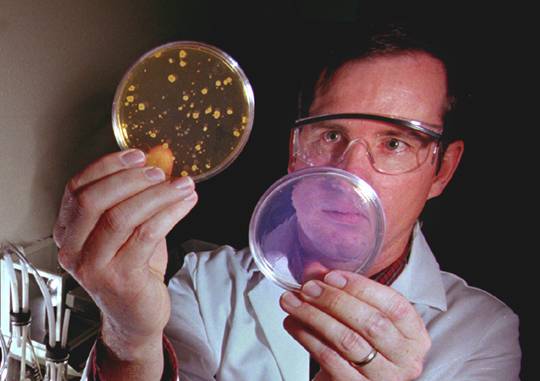
The live anthrax was inadvertently sent to a military research facility in Maryland from Dugway Proving Ground, a biochemical weapons laboratory, in Utah. There they were divided and sent out to private research institutions in nine U.S. states. One of the anthrax samples was also sent to the 51st Fighter Wing (Osan Air Base). Employees at a military-related institute in Maryland first discovered that the anthrax sample was live on May 22 and the U.S. military embarked on identifying the situation. They disclosed details of the incident five days later.
Reportedly, since the anthrax detection kit in Osan is contaminated, the military needs to check again with a detection kit from Gunsan in order to accurately identify whether or not the area near the lab in Osan Air Base has been contaminated.
Anthrax had been sent in an inactive state to U.S. military research centers and used in an anthrax-specific gene (DNA) detection program to enhance the ability to identify biological warfare on the battlefield.
The Korea Centers for Disease Control and Prevention announced, "Bringing highly infectious and risky pathogens into the country without government approval is a violation of the Infectious Disease Control and Prevention Act. However, this does not apply if they treated the pathogens as a normal article after determining it to be inactive."
<Sohn Je-min, Washington D.C. Correspondent, Bak Seong-jin longriver@kyunghyang.com>
Copyright © 경향신문. 무단전재 및 재배포 금지.
- 정용진 회장, 결국 직접 나선다···26일 ‘스벅 탱크데이 논란’ 대국민 사과
- ‘5·18은 간첩 소행’···가짜 신문 온라인에 유포한 50대 검거
- “동작 봐라, 엎드려뻗쳐”…광양 유세 중 ‘얼차려 논란’에 민주당 “깊이 사과”
- 27일 ‘삼전닉스’ 레버리지·인버스 나온다…“하루 최대 60% 손실 가능”, 마케팅도 제동
- 먹어도 되나? 왠지 신경쓰이는 계란 속 ‘흰 끈’···알고보니 중요한 ‘장치’
- 잠옷인듯 아닌듯···럭셔리부터 스트리트 패션까지 요즘 뜨는 ‘파자마 셔츠’
- ‘매관매직 의혹’ 김건희, 뒤늦게 바쉐론 시계값 2900만원 지급
- 도와주는 이 없이 ‘나홀로 선거 운동’···뒤에는 열 사람 대신하는 ‘AI 선거사무장’[①AI와 6
- 농식품부 장관, 스벅 사태에 “이 기회에 우리차 많이 드세요”
- 민주당·진보당 울산시장 단일화 파열음…김상욱 “특정 세력 개입 정황” 여론조사 중단 선언