[해외논단] 핵게임, 美·러 양자대결서 다자대결로
[세계일보]오바마 행정부는 미국을 재앙으로 몰아넣는 실책이 될 수 있는 가정에 따라 핵무기 정책을 추진하고 있다.
미국은 국가안보 유지에서 핵무기가 차지하는 역할을 이해하기 위해 노력했다. 노력은 가정이나 직관에 입각한 것이 아니라 논리적인 연구와 분석에 따랐다.
|
|
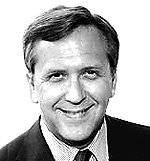
G 필립 휴즈 美 前 국가안보회의 사무국장 |
개척적인 여러 저서가 게임 이론, 수학적 모델, 여타 분석 도구를 제시하여 핵무기가 전면전의 수단이 아닌 세계 평화 유지의 수단이 되도록 도왔다. 핵 억지력 이론은 상호확증파괴보장 원칙으로 굳어졌다. 이는 미국 핵무기의 규모와 자세를 결정하는 이론의 집합체였다.
핵무기 시대 초기에는 많을수록 좋다는 이론이 제시되었으나 오래지 않아 적을수록 좋다는 이론으로 대체되었다. 1960년대 초에 미국 정책수립자들은 보다 정확한 소형 미사일과 핵탄두를 선택했는데 이런 정책 변경은 여전히 다다익선을 신봉했던 구소련과 대조적이었다.
1960년대 중반 이후 미국과 소련은 합의에 따라 핵무기 수를 줄임으로써 상호안보를 강화하는 시대로 접어들었다. 당시의 모든 핵 억지 개념은 근본적으로 미·소 양자 간의 대칭적인 무승부 대결구도에 입각한 것이었으나 1960년대에 영국, 프랑스, 중국 등 소수의 핵보유국이 등장했을 때 양자 모델은 큰 개념 수정이나 어려움 없이 정세변화를 포용했다.
이런 양자 구도 하에서 대폭적인 핵무기 감축이 이루어졌다. 1967년 미국의 핵탄두는 3만1255기, 전략핵 운반수단은 2268기로 절정에 도달했다. 2010년에 오바마가 서명한 새 전략무기감축조약에 따라 미국과 러시아의 실전배치 전략무기는 2021년까지 1550기, 운반수단은 700기로 줄인다. 이는 미국의 핵무기를 85% 줄이는 것이다.
이러한 감축에 선행하는 가정은, 핵무기 수가 적을수록 세계가 더 안전하다는 발상에 바탕을 둔다. 그러나 이런 가정에는 의문이 따른다. 헨리 키신저 등 일부 사람들은 미국이 핵무기의 완전제거 즉 소위 "제로 옵션"을 핵군축의 목표로 삼아야 한다고 주장한다. 새 전략무기감축조약은 제로 옵션 실현의 첫걸음이며 추가 감축이 진행 중이다.
그러나 이런 감축정책은 국제정세 변화를 따라가지 못하고 있다. 첫째 1970년대와 1980년대 이후 세계의 핵무기 판도가 변했다. 한마디로 오늘의 핵 게임은 양자를 축으로 이루어지는 것이 아니라 다자 게임이 되었다. 미·소의 억지 모델이 유효하다는 가정은 이미 비생산적이 된 지 오래다.
둘째 이처럼 핵보유국이 늘어나는 가운데 오바마 행정부는 동맹국들에 핵우산 연장을 제안하여 추가 핵확산으로 동맹국들이 받는 압박을 완화하기 위해 노력하고 있다. 1950년대 이후 미국의 핵우산을 보장받은 동맹국의 수는 30개를 넘는다. 힐러리 클린턴 미 국무장관은 이란의 핵무기 확보 때 핵우산을 걸프의 몇몇 우방국에 연장할 뜻을 내비쳤다.
절정기의 4분의 1밖에 안 되는 핵무기 운반수단으로 늘어나는 핵우산 보장 약속을 지킬 수 있다는 가정이 이런 오바마 정책의 근거다.
셋째 미국의 핵무기 감축은, 다른 핵 국가들 특히 중국이 미국과 대등한 경쟁자 지위에 올라서는 단계에 접근하거나 도달했을 가능성을 시사한다. 이런 현상 역시 핵무기 감축의 이로운 효과에 관한 미국의 가정과 배치된다.
끝으로 미국은 다자 핵무장 시대의 억지력 유지를 위한 필요와 조건을 파악하는 연구와 조사를 심도 있게 진행하지 않고 있다. 미국은 다자간 핵 억지력의 실현이 가능한지조차 모른다. 이런 한심한 상황을 극복하기 위해 미국은 어떤 조치를 취해야 할까.
우선 핵무기 추가 감축 협상의 중단을 선언해야 한다. 다음에는 국제 핵 문제를 파악하고 대책 마련을 위한 연구를 시작해야 한다. 미국의 핵무기 생산 기반산업을 부흥해야 한다. 새로 시작되는 시대에 필요한 핵무기 보유량을 파악할 때까지 추가 핵무기 감축을 보류해야 한다. 핵무기가 확산되는 세계에서는 적을수록 좋다는 가정을 보류해야 한다.
G 필립 휴즈 美 前 국가안보회의 사무국장
워싱턴 타임스·정리=오성환 외신전문위원
Rethinking the 'zero option'By G. Philip Hughes and Mark Davis
"Assumption is the father of error," or so we're told. When it comes to nuclear weapons, the Obama administration and many others are making assumptions that could lead our nation to catastrophic errors.
From the earliest days of the nuclear era, it was clear that these unfathomably destructive weapons had unprecedented implications for war and peace. So we worked hard to build our understanding of their role in maintaining our security, not on assumption and intuition, but on rigorous logic and searching analysis. Path-breaking books applied game theory, mathematical models and other analytical tools to ensure that these weapons would function as tools for maintaining a general peace, not launching a general war. Over time, thinking on nuclear deterrence became codified into the doctrine of mutually assured destruction. Ironically, though its acronym, MAD, implied "insane," the underpinnings were rigorous theories that shaped the size and posture of U.S. nuclear forces.
An early assumption of the nuclear age - that "more was better" - itself was fairly quickly replaced by more sophisticated ideas. Already in the early 1960s, U.S. planners were opting for smaller, more precise and accurate missiles and warheads - a contrast with Soviet choices. By the mid- to late-1960s, a "less is more" corollary to the deterrence doctrine took hold: the notion that U.S.-Soviet agreements to mutually reduce their nuclear arsenals would enhance security.
But whether understood as MAD or in a more nuanced variation, the doctrine of nuclear deterrence was a fundamentally two-sided, symmetrical confrontation - a Mexican standoff with the biggest guns imaginable. Though a handful of other nuclear powers emerged through the 1960s - the United Kingdom, France and China - the two-sided deterrence model could incorporate them as "lesser included cases" without much conceptual or practical difficulty.
Impressive nuclear-arms reductions were achieved in this fundamentally bilateral context. From a peak of 31,255 U.S. nuclear weapons and 2,268 U.S. strategic nuclear delivery vehicles in 1967, the New START Treaty signed by President Obama and Russian President Dmitry Medvedev in 2010 limits each side to a maximum of 1,550 actively deployed strategic nuclear weapons, and 700 strategic nuclear delivery vehicles through 2021 - an 85 percent reduction in actively deployed U.S. nuclear weapons. The assumption - the presumption - is that, just as in the Cold War years, fewer deployed nuclear weapons make the world a safer place.
But do they?
Many, of course, say yes. Beginning in 2007, former Secretaries of State Henry Kissinger and George Shultz, former Defense Secretary William Perry and former Sen. Sam Nunn, Georgia Democrat, published a series of articles that took this thinking to its logical conclusion: The United States should embrace the elimination of all nuclear weapons - a so-called "zero option" - as its ultimate arms-control goal, they said. In 2009, President Obama made the zero option the declared objective of U.S. policy. The New START reductions represent a down payment. Further cuts are in the works.
Still, what's wrong with that?
First, in case anyone missed it, the world has changed - a lot - since the 1970s and '80s. The Soviet Union has collapsed. Russia is no longer deemed a U.S. adversary, although its once-and-future-president, Vladimir Putin, often acts like one. India and Pakistan - despite dramatic U.S.-Russian arms reductions - have become nuclear powers, locked into their own bilateral MAD standoff. Israel is assumed to have nuclear weapons and the means to deliver them. North Korea has tested a nuclear weapon and progressively longer-range missiles. Iran's nuclear and long-range missile programs remain unconstrained - and even the see-no-evil International Atomic Energy Agency is alarmed at the prospect of its imminent development of nuclear weapons.
In short, today's nuclear game is organized around not two-way, but multiplayer, equations. It is purely an assumption that the axioms, theorems and logic of the bilateral U.S.-Soviet deterrence equations will continue to work as well as ever - if they haven't already become counterproductive.
Second, as nuclear players proliferate, the Obama administration's instinctive response is to reassure allies and tamp down pressures on friendly countries for still further proliferation by extending a U.S. nuclear umbrella that is shrinking. Since the 1950s, these guarantees have been extended to more than 30 allies. More recently, Secretary of State Hillary Rodham Clinton suggested that such guarantees might be extended to friendly Persian Gulf states should Iran acquire "the bomb." It is assumed that U.S. nuclear forces, with delivery vehicles now at one-fourth of their peak strength, are as credible in backing these guarantees as they ever were - to a widening circle of countries.
Third, the reduced size of the U.S. arsenal may be approaching - or has already reached - levels at which it invites other countries, in particular China, to become true peer competitors. This, of course, would contradict our assumptions about the beneficial effects of arms reductions.
Finally, we have done no significant theoretical or analytic work - certainly nothing on the scale, depth or thoroughness of the 1950s and '60's research - to develop a foundation for calculating the force requirements and conditions to achieve stable deterrence in a multiplayer setting. We don't even know if multiplayer deterrence stability is possible. We just assume it is - just as we assume that greatly reduced nuclear forces will be adequate to handle any and all threats that lie ahead. This is comforting, since it permits us to assume that the next arms-reduction treaty will only enhance our own, and the world's, security. Besides, the signing ceremony will make for great press coverage.
Now, this really is MAD-ness. What should we be doing instead?
1. We should announce a pause in further nuclear arms reduction negotiations. As we implement the New START reductions, we can re-examine our nuclear force requirements in a "brave new world" with new nuclear proliferators like Iran and North Korea and unstable nuclear powers like Pakistan.
2. We should get to work now - rapidly and urgently - on doing our homework on the problems, challenges, conundrums, paradoxes and complications of achieving stable nuclear deterrence in a multiplayer setting. And we should be prepared for that research to tell us things we don't really want to hear about its implications for future U.S. nuclear force requirements.
3. We should get on with revitalizing the U.S. nuclear-weapons production capability - negotiated by Senate Republicans as the price of ratifying New START. We should ensure that we are sustaining the industrial base for our nuclear delivery systems, in case the proliferated, multiplayer nuclear environment ahead requires larger or different nuclear capabilities than our Cold War legacy forces.
4. We should resolve now that U.S. nuclear force levels have reached a plateau - and sustain them without further reductions until we have worked through the implications and requirements of the new world we're entering.
It is time to stop assuming that "less is more" for security in a proliferated world.
Mexican standoff:무승부, 정돈상태
[Segye.com 인기뉴스]
[ⓒ 세계일보 & Segye.com, 무단 전재 및 재배포 금지] 세계일보 [지면보기][스마트캠페인][ 트위터/ 페이스북/ 미투데이]< 세계닷컴은 한국온라인신문협회(www.kona.or.kr)의 디지털뉴스이용규칙에 따른 저작권을 행사합니다. >
Copyright © 세계일보. 무단전재 및 재배포 금지.
- 30억 빚 → 600억 매출…허경환은 ‘아버지 SUV’ 먼저 사러 갔다
- 호적조차 없던 이방인서 수백억원대 저작권주…윤수일, ‘아파트’ 뒤 44년의 고독
- “내가 암에 걸릴 줄 몰랐다”…홍진경·박탐희·윤도현의 ‘암 투병’ 기억
- 47세 한다감도 준비했다…40대 임신, 결과 가르는 건 ‘나이’만이 아니었다
- 100억 쓰던 ‘신상녀’ 300원에 ‘덜덜’…서인영 “명품백 대신 가계부 쓴다”
- “통장 깔까?” 1300억 건물주 장근석의 서늘한 응수…암 투병 후 악플러 ‘참교육’한 사연
- "故 전유성, 지금까지 '잘 놀았다'고"…최일순, 유작 작업 중 그리움 드러내
- “깨끗해지려고 썼는데”…물티슈, 항문 더 망가뜨리는 이유 있었다
- “밤에 2번 깨면 다르다”…피곤인 줄 알았는데 ‘야간뇨 신호’였다
- "계좌 불러라" 폐업날 걸려온 전화...양치승 울린 박하나의 '묻지마 송금'